Ivy Hui-Yuan Yeh
葉惠媛
Reading the human past and future through bones, pathogens, and porcelain — with AI.
Bioanthropology · Pathogens · Forensic AI · Porcelain & Art Market Analytics
Biological Anthropologist · AI for Art & Archaeology
Cambridge PhD
Email Address: ivy.hyyeh@gmail.com
Google Scholar · ResearchGate
I.
Biography
Ivy received her professional training at a teacher-training college before pursuing studies in the Department of Anthropology and the School of Medicine at National Taiwan University. After working at Academia Sinica in Taipei, she pursued her PhD in the Division of Biological Anthropology at the University of Cambridge. Her research expertise lies in biological anthropology, supported by an interdisciplinary background. For two years, Ivy supervised and mentored students in both laboratory work and essay writing at Cambridge. In 2016, Ivy joined Nanyang Technological University (NTU), Singapore, and was subsequently appointed Nanyang Asst. Professor under NTU’s elite NAP scheme.
II.
Service & Appointments
Throughout her career, Ivy has held several roles, including Coordinator of the Medical Humanities Research Cluster at NTU, NTU iGave Ambassador of the School of Humanities, member of the International Advisory Committee (IAC) of the Chinese Heritage Centre (CHC) at NTU, Committee member for the Conference on Pan-Pacific Anthropocene (ConPPA), editorial board member of the International Journal of Osteoarchaeology, and Topic Editor for Frontiers in Genetics.
III.
Current Research
Ivy currently has four main projects below:
01
Bioanthropology and Bioarchaeology Projects
Ivy studies the health, disease, diet, and nutrition of human communities, with a focus on how pathogens and population interactions have shaped human health across history. Her research investigates the global spread of disease from an evolutionary perspective, including projects along the Silk Road and the Austronesian expansion, exploring how long-distance trade, migration, and seafaring influenced disease transmission and nutrition. By examining pathogens in historical and geographical contexts, her work sheds light on how societies have been affected by disease—and what this may reveal for the future.
These studies are conducted in collaboration with Harvard University and the University of Cambridge.
02
Socio-Cultural Anthropology and History Projects
Ivy’s research investigates human trust mechanisms, transregional network building, and the evolution of civilization, with a focus on how technological shifts, migration, and commercial organizations have reshaped social structures and human interaction across history.
Her work examines the dynamics of trust from both evolutionary and global perspectives, ranging from the long-term transformation of trust systems from prehistoric settlements to the era of artificial intelligence (The Trust Web: From Fire Pits to AI—The Hidden Forces Behind Human Civilization) to deep empirical studies in Southeast Asian Chinese migration, Chinese business history, and family heritage (The Boon Pang Legacy: From Southern China to the Heart of Brunei).
By bridging macro-level theories of civilization with micro-level transregional enterprise networks, her research illuminates how Chinese merchant houses and diaspora communities constructed institutional and informal trust mechanisms across borders. Ultimately, these studies integrate rigorous regional historical evidence with macro-theoretical frameworks, shedding light on how societies organize around trust—and what these historical patterns reveal for the future of human governance and digital trust in the technological age.
Featured works: The Trust Web: From Fire Pits to AI—The Hidden Forces Behind Human Civilization · The Boon Pang Legacy: From Southern China to the Heart of Brunei
03
Artificial Intelligence in Art, Market, and Financial Analysis
In addition to research in biological anthropology, bioarchaeology, and medical AI, Ivy explores the application of artificial intelligence to art and archaeology. Ivy is developing deep learning models to classify and interpret blue-and-white porcelain by dynastic period.
Using a multi-view dataset of 284 Ming and Qing objects (986 images), a fine-tuned ResNet-50 achieved the highest classification accuracy, and incorporating multiple views per object further improved performance. Explainable AI techniques show that the model focuses on features such as shape and decorative motifs, while feature visualizations reveal clear clustering by dynasty and object type.
This work highlights how AI can uncover patterns in cultural heritage and support the analysis of artifacts for research and public engagement. The next step is to extend the models to predict art market values, combining cultural insights with economic analysis in the art world.
Building on this research, our team has developed an art-intelligence app, which has received backing from angel investors.
04
Deep Learning Algorithms in Forensic Anthropology
Ivy uses machine learning to support forensic medicine doctors in identifying unknown victims. Beyond modern forensics, this approach also helps correct biases in historical and archaeological datasets—by refining age, sex, and population estimates, it improves the accuracy of ancient population reconstruction and the interpretation of past demographic structures.
Conducted in collaboration with a Taiwanese forensic team, bridging modern victim identification and ancient population reconstruction.
IV.
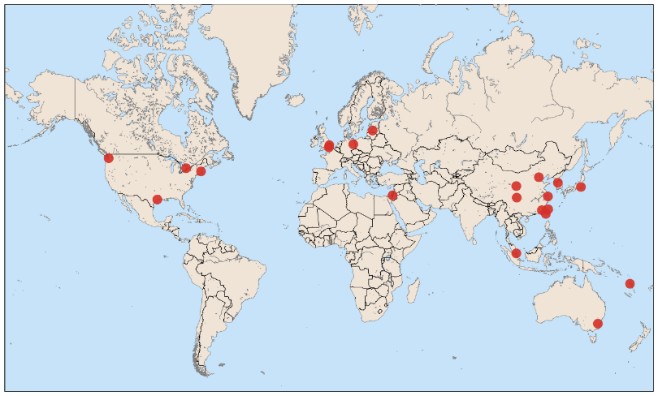
Collaboration Network